
During these times when the words “Diversity, Equity, and Inclusion” now ring like church bells from every corner of the land, seasoned anthropology students might be seen to have an amusing grin when confronted with this new mantra. Why? From the very genesis of anthropology as an academic field in 1896, the new discipline was known for its diversity, equity, and inclusion at a time when women and people of color were prevented from entering the hallowed halls of learning and studying in more traditional fields of the sciences and humanities. To whom do we owe this distinction? Franz Boas, an immigrant Jew born in Minden, Germany, in 1858.
Franz Boas (1858–1942)

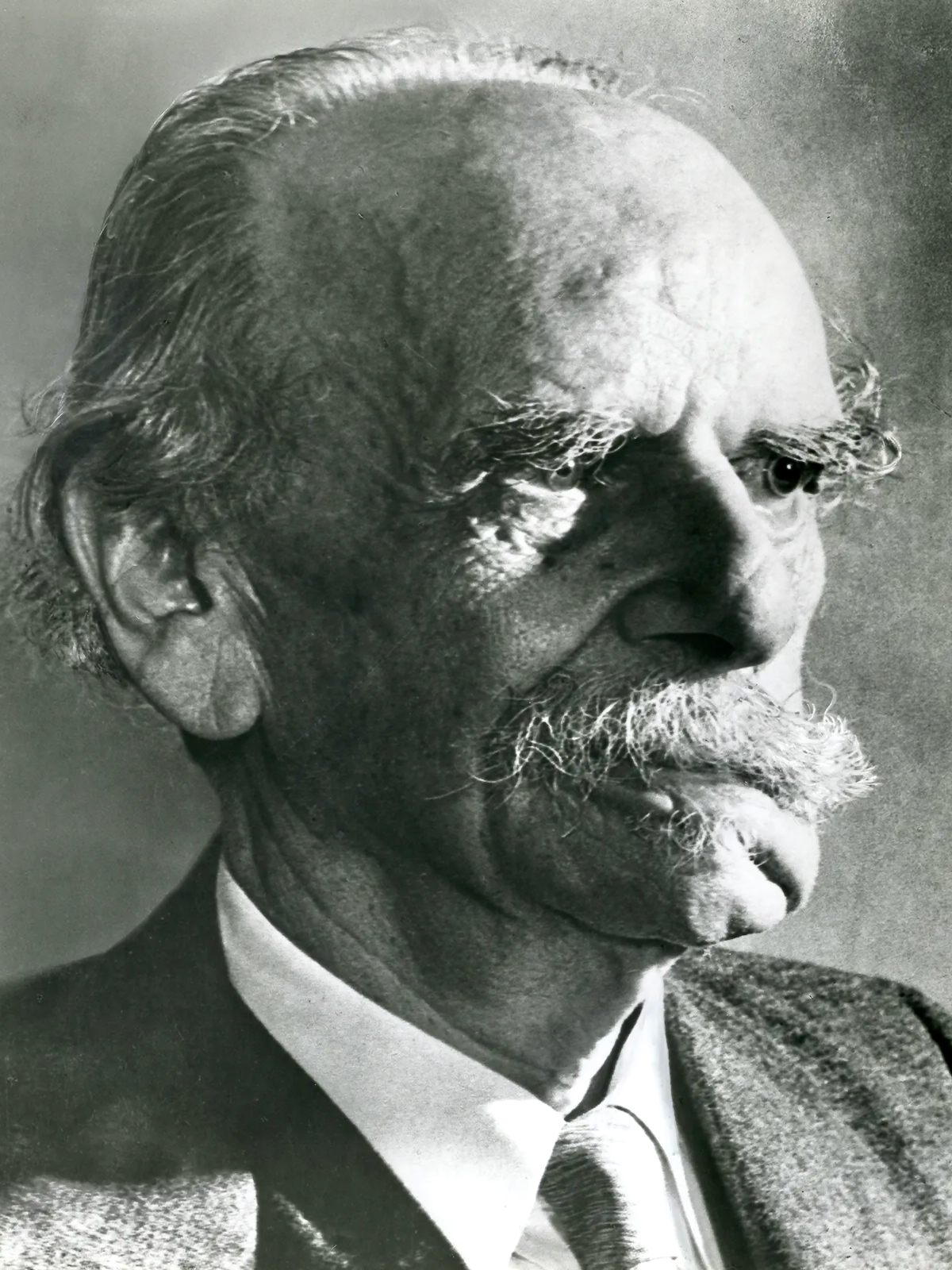
Franz Boas was an immigrant Jew. He was born in Minden, Germany, in 1858 and emigrated to the United States in 1887. Boas is often affectionately referred to as “Papa Franz” by his students, reflecting the deep respect and admiration they had for him as a mentor and pioneer in the field of anthropology. His nurturing and supportive approach to teaching and mentoring his students earned him this endearing nickname.
Franz Boas (1858–1942) began his career with a strong scientific background in physics and geography, earning his doctorate in 1881 from the University of Kiel in Germany. His early research focused on seawater’s physical properties, explicitly studying its color and relationship to light absorption and scattering. This work took him to Baffin Island in 1883, where he conducted field studies in Arctic conditions. During this expedition, Boas first encountered the Inuit people, whose way of life deeply intrigued him. Observing the Inuit camped near the supply stores, Boas became captivated by their resourcefulness, social structures, and adaptation to the harsh Arctic environment. This encounter marked a pivotal moment in his career, shifting his focus from physical geography to studying human cultures. Boas’s curiosity about the Inuit’s way of life ultimately led him to pioneer a more holistic and cultural approach to anthropology, emphasizing the importance of fieldwork and cultural relativism.
Boas established the first academic program of anthropology in the United States at Columbia University in 1899, where he mentored many future leaders in the field, including Ruth Benedict, Margaret Mead, and Zora Neale Hurston. Franz Boas was notable for encouraging diversity in his Ph.D. program at Columbia University. He actively supported the inclusion of women and minorities in anthropology at a time when such opportunities were rare in academia. Boas believed that intellectual capability transcended gender, race, and background, and he sought out talented individuals regardless of their previous fields of study, whether in science or the humanities. His emphasis on cultural relativism and the importance of fieldwork fundamentally reshaped the discipline, promoting the idea that cultures should be understood on their terms and that anthropologists must immerse themselves in the cultures they study. His conceptual framework came to be known as historical particularism which argues that each culture has its own unique historical development and must be understood within its specific historical and environmental context.
Boas’s research with the Kwakiutl became foundational to his development of cultural relativism. He argued that their customs and social practices could only be understood within their culture rather than through Western frameworks. This work laid the groundwork for his holistic approach to anthropology, emphasizing the interconnection of language, culture, and history. His studies of other indigenous groups in the region, including the Tsimshian and Bella Coola, further solidified his reputation as a pioneering field anthropologist.
A pioneering figure in anthropology, Boas made significant contributions to the field, particularly in his views on race and culture. Boas argued that race is not a fixed biological category, but a social construct influenced by environmental and cultural factors. This perspective was revolutionary at a time when scientific racism was prevalent. His research, such as the study on the cranial shapes of immigrant children, demonstrated that physical traits often attributed to race could change due to environmental factors, challenging the notion of racial determinism. In The Mind of Primitive Man (1911, revised 1938), Boas dismantles the pseudo-scientific ideas of racial hierarchy prevalent in his time, emphasizing the “plasticity” of human traits and the role of environmental and cultural factors in shaping individuals and groups. The book is considered foundational in challenging racist ideologies and advancing the anthropological understanding of human diversity.
After Franz Boas’s transformative experience with the Inuit during his 1883 expedition to Baffin Island, he began focusing more intently on studying indigenous cultures. His shift in focus led him to study the First Nations peoples of the Pacific Northwest, particularly the Kwakiutl (Kwakwaka’wakw). Boas conducted extensive fieldwork among the Kwakiutl in British Columbia, examining their rich oral traditions, social organization, potlatch ceremonies, art, and language. His groundbreaking work, The Social Organization and the Secret Societies of the Kwakiutl Indians (1897) documented these aspects in detail and became one of the most influential texts in anthropology.
Franz Boas made monumental contributions to anthropology. He is credited with developing the modern approach to cultural anthropology, emphasizing fieldwork, participant observation, and cultural relativism. Boas argued that cultures should be understood on their terms rather than through the lens of Western standards, which challenged the ethnocentric attitudes of his time. His holistic approach integrated physical anthropology, linguistics, archaeology, and cultural anthropology into a unified discipline. One of his most influential texts, Race, Language, and Culture (1940), is a collection of essays encapsulating his lifelong commitment to dismantling racist ideologies, understanding the interplay of language and thought, and advancing the scientific study of human diversity. This work remains a cornerstone of anthropological theory and practice.
Franz Boas was the first president of the American Anthropological Association (AAA), serving from 1902 to 1906. His leadership helped establish the AAA as a central organization for anthropology in the United States. Boas’s presidency reflected his prominent role in shaping American anthropology, particularly his emphasis on cultural relativism, rigorous fieldwork, and the rejection of ethnocentric and racist theories prevalent at the time. His influence on the discipline through the AAA and his mentorship of future anthropologists remains a cornerstone of the field’s history.
Among his notable students was Ruth Benedict who entered Boas’ program with a strong literary and humanities background before becoming a prominent cultural anthropologist.
Ruth Benedict (1887–1948)
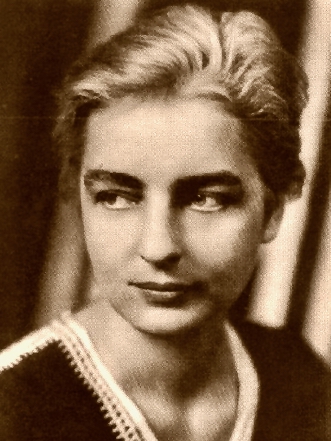
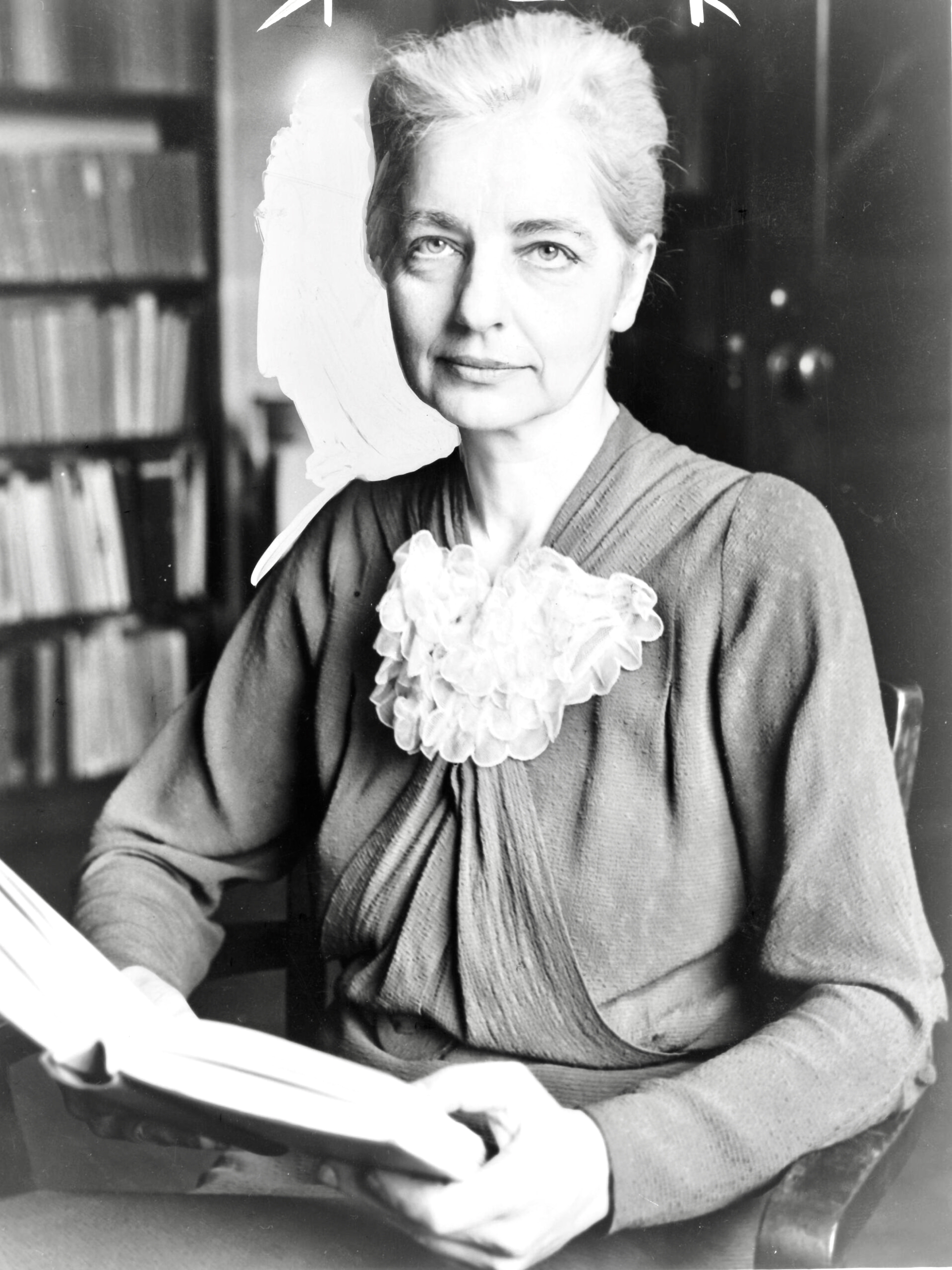
Ruth Benedict (1887–1948) was a groundbreaking cultural anthropologist who profoundly influenced the discipline with her theories on cultural relativism and the interplay between culture and personality. As a student of Franz Boas at Columbia University, Benedict championed the idea that cultures must be understood on their terms rather than judged by external, ethnocentric standards. Her seminal book, Patterns of Culture (1934), likened culture to a “personality writ large,” demonstrating how societal values and norms shape individual behavior. She famously stated, “The purpose of anthropology is to make the world safe for human differences.”
Benedict conducted fieldwork among Native American tribes, such as the Zuni and Kwakiutl. As a pioneer in the “culture and personality” movement, Benedict’s contributions laid the groundwork for later anthropological and psychological research. Her legacy endures as a champion of cross-cultural understanding and one of the first women to rise to prominence in anthropology. Benedict’s research included studies of Native American tribes such as the Zuni and Kwakiutl and Japan during World War II. Her wartime work, The Chrysanthemum and the Sword (1946) provided critical insights into Japanese culture, influencing post-war diplomacy.
Ruth Benedict argued against putting Emperor Hirohito of Japan on trial or subjecting him to punishment after World War II. In her wartime study, The Chrysanthemum and the Sword (1946), Benedict provided an in-depth cultural analysis of Japanese society, focusing on its hierarchical structure, values, and loyalty to the Emperor. She recognized that the Emperor was symbolic in Japanese culture, serving as a unifying figure deeply tied to national identity and social order.
Benedict’s research led her to advise that punishing or trying the Emperor could destabilize Japanese society and hinder post-war reconstruction efforts. She believed such an action would profoundly damage the Japanese people’s morale and impede efforts to transition the country to a peaceful, democratic state. Her insights helped shape U.S. policy during the occupation of Japan, where the Emperor was allowed to retain his symbolic position, albeit with significantly reduced power under the new constitutional framework. This decision was instrumental in maintaining stability during Japan’s recovery and is undoubtedly one of the rare instances where a cultural anthropologist significantly affected American policy decisions during a war campaign.
As a pioneer of the “culture and personality” school, Benedict’s work explored how societal norms shape individual psychology, bridging anthropology and psychology. She shared this perspective with Margaret Mead, her mentee and collaborator, who further developed and popularized these ideas. Benedict also observed, “We do not see the lens through which we look,“ a reminder of the cultural biases anthropology seeks to overcome. Benedict’s legacy endures as a champion of cultural understanding and one of the first women to attain prominence in the field.
Ruth Benedict died on September 17, 1948, at the age of 61, from a heart attack. At the time of her death, she was in New York City, where she lived and worked as a faculty member at Columbia University. Benedict’s sudden passing cut short a remarkable career that had profoundly influenced cultural anthropology and the broader understanding of human diversity.
We turn now to Margaret Mead, student and colleague of Ruth Benedict, who put a public face on cultural anthropology, becoming a vocal advocate for social issues like a return to breastfeeding at a time when cultural anthropologists were supposed to remain ensconced behind the walls of academia.
Margaret Mead (1901–1978)

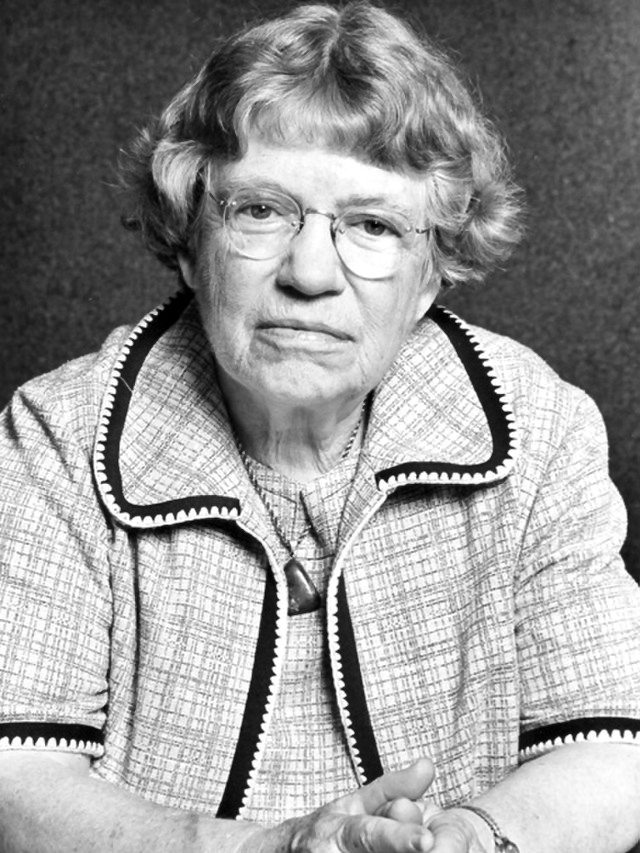
Margaret Mead (1901–1978) was a pioneering cultural anthropologist whose work profoundly influenced the field and popularized anthropology for a broader audience. Trained under Franz Boas and Ruth Benedict at Columbia University, Mead is best known for her ethnographic research in Samoa, which was documented in Coming of Age in Samoa (1928). Her study challenged Western assumptions about adolescence, suggesting that cultural factors shape human behavior rather than biological imperatives.
Mead conducted extensive fieldwork in the Pacific, focusing on gender roles, child-rearing, and social structures. Her comparative analyses emphasized the role of culture in shaping personality and societal norms, which helped introduce the concept of cultural relativism to the public.
Mead’s ethnographic studies, particularly her observations on child-rearing practices and adolescence in Samoa (Coming of Age in Samoa, 1928) and later studies in New Guinea (Sex and Temperament in Three Primitive Societies, 1935), were instrumental in demonstrating the profound impact of cultural norms on individual psychological development. These studies challenged the notion that human behavior is universally biologically determined and instead highlighted the variability of human psychology across different cultural contexts. Margaret Mead’s work significantly contributed to developing “culture and personality” studies, a field that bridges anthropology and psychology. This interdisciplinary approach, influenced by Mead’s research and that of her mentor Ruth Benedict, explores how culture shapes individual personality traits and behavioral patterns.
The culture and personality school, associated with figures like Benedict, Mead, and later Edward Sapir, laid foundational ideas for cross-cultural psychology and developmental psychology, influencing how psychologists understand the interplay between societal norms and individual mental processes.
Margaret Mead had a daughter, Mary Catherine Bateson, with her third husband, anthropologist Gregory Bateson. Born in 1939, Mary Catherine Bateson was not only the child of two renowned anthropologists but also became an accomplished cultural anthropologist and author in her own right.
Mary Catherine Bateson was the subject of a study by her parents, Margaret Mead and Gregory Bateson. They used their observations of Mary Catherine as part of their broader research on child development and parenting. This project included documenting her early years and interactions as they explored how cultural environments influence the growth and learning of children. These studies were often intertwined with their fieldwork and theoretical inquiries into the relationships between culture, family, and individual psychology.
Mead and Bateson were particularly interested in how parenting styles and environmental factors contributed to personality development. Their observations of Mary Catherine informed some of their broader theories, and Benjamin Spock was her pediatrician who purportedly drew from lessons learned from Dr. Mead.
Margaret Mead collaborated with Dr. Benjamin Spock, the famous pediatrician and author of The Common Sense Book of Baby and Child Care (1946), which revolutionized parenting practices in the mid-20th century. Mead and Spock shared a commitment to improving child-rearing practices and worked together on initiatives related to child development, education, and parenting advice.
During the mid-20th century, when bottle feeding and formula were heavily marketed as modern and superior alternatives to breastfeeding, Mead was a vocal advocate for the natural benefits of breastfeeding. She emphasized the cultural and biological importance of breastfeeding, both for the health of the baby and the emotional bonding between mother and child. Mead drew on her anthropological studies of child-rearing practices in non-Western societies, where breastfeeding was a natural and integral part of raising children, to challenge the trend of formula feeding in the U.S.
Nestlé and other companies heavily promoted infant formula as a modern substitute for breastfeeding, particularly in the 1950s and 1960s, and especially throughout Latin America where it was promoted as a characteristic of “advanced civilization.” Mead criticized these practices, noting that they undermined the natural and cultural significance of breastfeeding and often prioritized corporate profits over maternal and child health.
Margaret Mead’s anthropological insights helped shift attitudes in favor of breastfeeding as a healthy and natural choice, contributing to the broader movement to challenge formula marketing and reassert the value of maternal care. Her work alongside Spock amplified these messages, encouraging parents to prioritize natural and emotionally responsive child-rearing practices.
A prolific writer and speaker, Mead bridged the gap between academia and public discourse, advocating for understanding cultural diversity and addressing contemporary social issues like gender equality and education. Her legacy endures as a champion of interdisciplinary approaches and cultural awareness.
Margaret Mead died on November 15, 1978, at the age of 76, in New York City. She passed away from pancreatic cancer. At the time of her death, Mead was still actively engaged in her work, reflecting her lifelong dedication to anthropology. Mead’s contributions to the field and her efforts to make anthropology accessible to the public left an enduring legacy.
We will now examine the life and work of Zora Neale Hurston, anthropologist and student of Boaz, African American writer, and folklorist whom one critic called “one of the intellectual giants of the 20th century.”
Zora Neale Hurston (1891–1960)

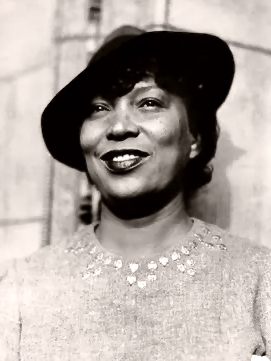
Zora Neale Hurston (1891–1960) was a pioneering African American writer, folklorist, and anthropologist whose work bridged the gap between literature and cultural anthropology. Born in Eatonville, Florida, one of the first all-Black towns in the United States, Hurston grew up immersed in African American oral traditions, stories, and songs that became central to her work. Her deep respect for cultural expression and identity eventually led her to study anthropology, where she used her skills to document the lives, customs, and folklore of African American and Caribbean communities.
Upon her graduation from Barnard College in 1928, where she studied anthropology under Franz Boas, Hurston won a scholarship to pursue graduate studies under Boas at Columbia University for two years, where she became one of the few African American women of her time to train as an anthropologist. Boas, often called the “Father of American Anthropology,” encouraged Hurston’s ethnographic approach and supported her belief that African American culture was a rich and valid subject of academic study. With Boas’ guidance and alongside prominent anthropologists like Ruth Benedict and Margaret Mead, Hurston learned to apply rigorous anthropological methods to fieldwork while maintaining a deep cultural sensitivity to her subjects.
Hurston’s anthropological contributions are exemplified in her collection of African American folklore, Mules and Men (1935). In this work, she combined academic fieldwork with storytelling, documenting folktales, songs, and sayings from Black communities in the American South. Unlike many anthropologists of her era, Hurston conducted her work as an “insider,” gaining the trust of her informants and presenting their voices authentically and vividly. She also traveled to the Caribbean, where she studied the practice of Vodou in Haiti and Jamaica, resulting in her ethnographic study Tell My Horse (1938). Her work demonstrated how cultural practices reflect deep-rooted histories, resilience, and identity.
Zora Neale Hurston’s most celebrated work, Their Eyes Were Watching God (1937), is a masterpiece that blends her anthropological insights with her literary brilliance. The novel follows the journey of Janie Crawford, an African American woman in the early 20th century, as she navigates love, identity, and self-discovery. Drawing on Hurston’s deep understanding of African American oral traditions and cultural practices, the novel is richly infused with folkloric elements and the cadences of Southern Black dialect. While fictional, the book reflects Hurston’s ethnographic work and demonstrates her ability to portray complex characters and cultural nuances with authenticity. The novel’s exploration of gender, race, and personal agency mirrors Hurston’s life and her determination to document and celebrate the richness of African American culture. Their Eyes Were Watching God has since become a cornerstone of African American literature and feminist studies, cementing Hurston’s legacy as a cultural icon and literary pioneer.
Despite her significant contributions, Hurston’s work was underappreciated during her lifetime, as the intersection of race, gender, and class often marginalized her achievements. However, her groundbreaking approach to anthropology, which combined rigorous fieldwork with creative narrative forms, has since earned widespread recognition. Hurston paved the way for future anthropologists and writers, showing that studying culture can be both scholarly and profoundly human. Today, she is celebrated not only as a literary icon of the Harlem Renaissance but also as a trailblazer in anthropology who brought African American and Caribbean cultures to the forefront of academic discourse.
Financial struggles and declining health marked Zora Neale Hurston’s later years. She spent much of the 1950s working in relative obscurity, taking jobs as a maid and substitute teacher to make ends meet. In 1960, she suffered a stroke and was admitted to a welfare home in Fort Pierce, Florida, where she passed away on January 28, 1960, at the age of 69. Hurston was buried in an unmarked grave in the Garden of Heavenly Rest cemetery, a stark reflection of the neglect she faced during her final years. Her contributions to literature and anthropology were largely forgotten for nearly two decades. However, in the 1970s, author Alice Walker, inspired by Hurston’s work, led a revival of interest in her life and legacy. Walker famously located Hurston’s unmarked grave, placed a marker honoring her as a “Genius of the South,” and brought renewed attention to her writings. Hurston’s work now holds a celebrated place in literature and anthropology thanks to this rediscovery, ensuring that her legacy continues to inspire future generations.
In Part II of ‘The Rich Diversity of Anthropology,’ we will delve deeper into the remarkable individuals who found acceptance in Boas’ groundbreaking doctoral program—a visionary effort that defied the norms of its time by welcoming those beyond the privileged elite into the halls of academia.
References & Resources
Franz Boas
American Museum of Natural History. (n.d.). Franz Boas (1858–1942). https://www.amnh.org/exhibitions/anthropology/franz-boas
Biography.com Editors. (2022, September 15). Franz Boas biography [Photograph]. A&E Television Networks. Retrieved December 23, 2024, from https://www.biography.com/scientists/franz-boas
Boas, F. (1897). The social organization and the secret societies of the Kwakiutl Indians. Report of the United States National Museum for 1895
Boas, F. (1938). The Mind of Primitive Man (Revised Edition). Macmillan.
(pp. 311-738). Washington, DC: Government Printing Office.
Boas, F. (1940). Race, language, and culture. Macmillan.
Encyclopædia Britannica. (n.d.). Franz Boas [Image]. In Encyclopædia Britannica. Retrieved December 23, 2024, from https://www.britannica.com/biography/Franz-Boas#/media/1/70705/8965
Ruth Benedict
Benedict, R. (1934). Patterns of culture. Houghton Mifflin.
Benedict, R. (1946). The chrysanthemum and the sword: Patterns of Japanese culture. Houghton Mifflin.
Vassar College. (n.d.). Ruth Benedict ’1909 – Vassar Encyclopedia. https://vcencyclopedia.vassar.edu/alumni/ruth-benedict/
Vassar College Encyclopedia. (n.d.). Ruth Benedict ’1909 [Photograph]. Retrieved December 23, 2024, from https://vcencyclopedia.vassar.edu/distinguished-alumni/ruth-benedict/
World Telegram staff photographer. (1937). Ruth Benedict, American anthropologist [Photograph]. Library of Congress. Retrieved December 23, 2024, from http://hdl.loc.gov/loc.pnp/cph.3c14649
Margaret Mead
Bateson, M. C. (1984). With a daughter’s eye: A memoir of Margaret Mead and Gregory Bateson. William Morrow.
Institute for Intercultural Studies. (n.d.). Margaret Mead: A Life of Learning. http://www.interculturalstudies.org/Mead/
Gilbert, L. (1977). Margaret Mead [Photograph]. Wikimedia Commons. Retrieved December 23, 2024, from https://commons.wikimedia.org/wiki/File:Margaret_Mead_1977_%C2%A9Lynn_Gilbert.jpg
Mead, M. (1928). Coming of age in Samoa: A psychological study of primitive youth for Western civilization. William Morrow.
Mead, M. (1935). Sex and temperament in three primitive societies. William Morrow.
Science Service. (1948, October 18). Margaret Mead at the Second International Symposium on Feelings and Emotions[Photograph]. Smithsonian Institution Archives. Retrieved December 23, 2024, from https://siarchives.si.edu/collections/siris_arc_290430
Spock, B., & Needlman, R. (2004). Baby and child care (Rev. ed., D. Fox, Illus.). Gallery Books. (Original work published 1946)
Zora Neale Hurston
Bronze Butterfly. (2018, April 20). Words of wisdom: Zora Neale Hurston [Photograph]. Retrieved December 23, 2024, from https://bronzebutterfly.blog/2018/04/20/words-of-wisdom-zora-neale-hurston/
Hurston, Z. N. (1935). Mules and men. J.B. Lippincott.
Hurston, Z. N. (1937). Their eyes were watching God. J.B. Lippincott.
Hurston, Z. N. (1938). Tell my horse: Voodoo and life in Haiti and Jamaica. J.B. Lippincott.
PBS. (n.d.). Zora Neale Hurston: Claiming a Space. https://www.pbs.org/wgbh/americanexperience/films/zora-neale-hurston-claiming-space/
Unknown author. (n.d.). Zora Neale Hurston, American author [Photograph]. Library of Congress. Retrieved December 23, 2024, from https://www.loc.gov/pictures/item/2004672085/
Zora Neale Hurston Trust. (n.d.). Official Zora Neale Hurston website. Retrieved December 20, 2024, from https://www.zoranealehurston.com
Written with the assistance of ChatGPT-4 by OpenAI (https://chat.openai.com)
Please Consider A Contribution To Help Maintain This Site!


Pingback: The Rich Diversity of Anthropology – Part 2 | Anderson's Ethnographic Notes