
“The words or the language, as they are written or spoken, do not seem to play any role in my mechanism of thought. The psychical entities which seem to serve as elements in thought are certain signs and more or less clear images.”
— Albert Einstein
In a recent conversation, I found myself reflecting on an intriguing phrase: “fringe physics and the novelty of language.” At first glance, the two ideas may appear unrelated. Fringe physics refers to unconventional or speculative theories that lie outside mainstream scientific consensus. The novelty of language, by contrast, concerns the creative emergence of new words, metaphors, and conceptual frameworks. Yet the more one reflects on the history of science, the more it becomes clear that these two domains are deeply intertwined. In this post, I explore the relationship between speculative physics, scientific imagination, and the creative power of language.
Albert Einstein (1879–1955)
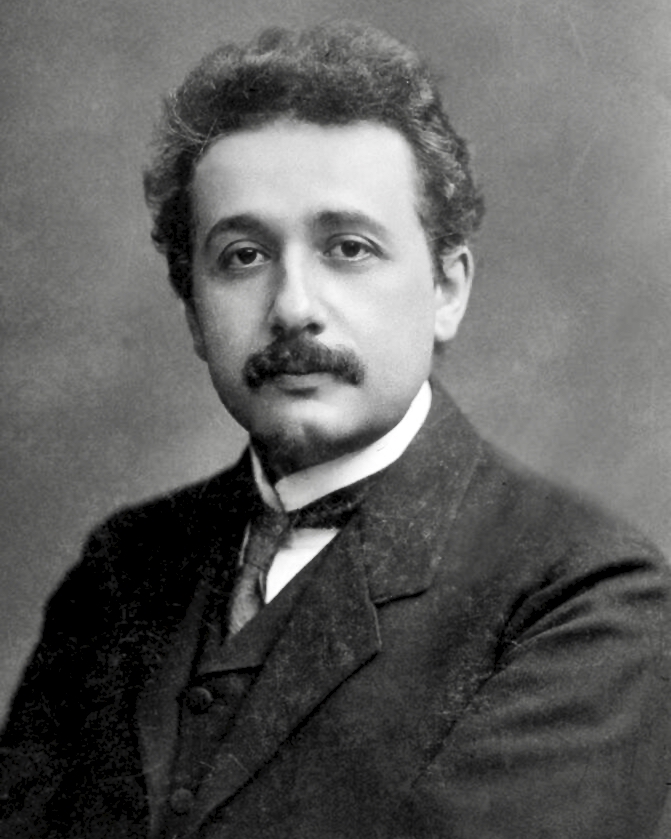
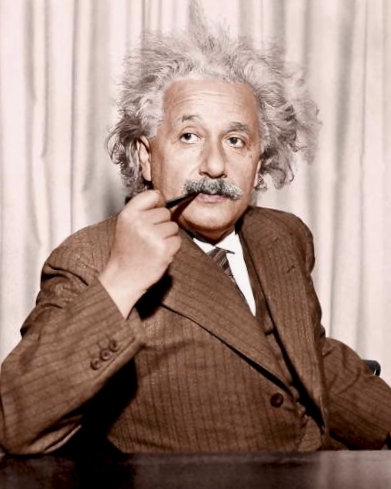
Einstein’s reflection on the non-verbal, imagistic character of his own thinking appears, at first glance, to challenge any account that places language at the center of scientific creativity. Yet such a reading risks mistaking the surface form of thought for its underlying conditions of possibility. While Einstein may have experienced his reasoning as proceeding through images and intuitive signs, these cognitive processes did not emerge in isolation. Rather, they unfolded within a deeply internalized framework of linguistic and symbolic structures—mathematics, physical concepts, and inherited theoretical vocabularies—that rendered such imaginative activity intelligible and, ultimately, communicable.
Scientific imagination, in this sense, neither precedes language nor is reducible to it. The two are structurally entangled: imagination operates within a horizon already shaped by language, even as language is continually extended, strained, and reconfigured by imaginative breakthroughs. Nowhere is this more evident than in moments of theoretical transformation, where the limits of existing linguistic and conceptual frameworks are exposed, and new forms of expression must be forged to articulate previously unthinkable realities.
Discovering the Idea of Fringe Physics
A recent presentation by the Pari Center for New Learning introduced me to the idea of fringe physics. The event explored speculative questions at the boundaries of physics, cosmology, and consciousness. Readers interested in the discussion can explore the program here: Matter Mind & Multiverse
While many of these ideas remain controversial or highly speculative, the broader theme is fascinating: scientific progress often begins at the conceptual margins, where new language and new models attempt to describe realities that current frameworks cannot fully explain.
David Bohm (1917–1992) & F. David Peat (1938–2017)
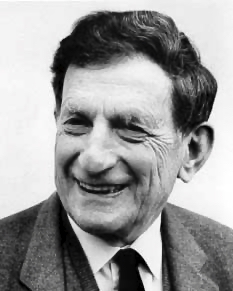
This line of inquiry finds an early resonance in the later work of David Bohm, who began to question the extent to which the structures of language shape, and potentially constrain, the conceptual horizons of modern physics. These concerns were subsequently carried forward in the interdisciplinary work of F. David Peat and the Pari Center for New Learning, where dialogue across physics, language, and culture became central to rethinking the foundations of scientific thought. It is within this broader context that the present study situates its central claim: that the architecture of scientific imagination is inseparable from the linguistic structures that both enable and delimit what can be conceived as real.
Language Before Mathematics
Throughout the history of modern physics, radical breakthroughs have often begun not with equations but with new ways of speaking about reality. Consider familiar terms such as:
many worlds / curved spacetime / quantum foam / black holes
These phrases did not simply label discoveries. They opened new conceptual horizons through which scientists could imagine the structure of the universe. Only later were these imaginative ideas formalized in mathematical frameworks.
Paradigms and Scientific Language
The philosopher of science Thomas Kuhn famously argued that scientific revolutions occur when established paradigms give way to new conceptual frameworks. These paradigm shifts often involve transformations in scientific language itself.
Thomas Samuel Kuhn (1922–1986)

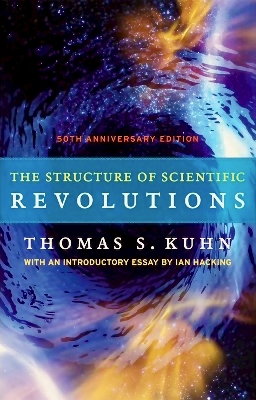
What scientists are able to see in the world depends partly on the conceptual frameworks within which they work, yet these frameworks are often destabilized by persistent anomalies—phenomena that resist explanation within the existing paradigm. As Thomas Kuhn observed, the accumulation of such anomalies can lead to a period of crisis, prompting a reexamination of underlying assumptions and a search for new ways of understanding. In this process, imaginative insight frequently precedes formal articulation, as researchers reorganize what is already known into new conceptual patterns. Only afterward do new terms and conceptual vocabularies emerge, helping to stabilize and communicate what was first grasped intuitively.
As Thomas Kuhn observes in his discussion of early research into radioactivity, the work of Marie and Pierre Curie confronted phenomena that could not be fully accommodated within existing scientific categories. What initially appeared as anomalous findings required not only experimental verification but conceptual and linguistic innovation, culminating in the naming and classification of elements such as radium. In such moments, scientific inquiry reaches beyond the limits of its inherited vocabulary, and new forms of expression must be developed to render the unfamiliar intelligible.
In reflecting on the relationship between fringe physics and the novelty of language, a deeper question emerges about the nature of the world we inhabit as thinking beings. Scientific discovery is often understood as a process of uncovering truths about an external reality, yet it also involves the construction of conceptual frameworks through which that reality becomes intelligible, recalling the insight that the mind actively participates in structuring experience. This essay argues that while the physical universe exists independently of us, human beings construct the world they inhabit through language, conceptual frameworks, and symbolic systems, within which scientific knowledge takes shape. These constructed worlds are not arbitrary or purely imaginative but are continually tested and reshaped through empirical engagement with a reality that resists and constrains them.
Scientific revolutions, in this sense, are also linguistic revolutions.
Imagination Before Language
The opening quotation above captures something remarkable: Einstein, one of the greatest scientific minds in history, insisted that language played almost no role in his earliest thinking. He relied instead on visual and conceptual images, translating these into words and equations only at a later stage. This observation suggests that scientific creativity may begin with imaginative mental models that language subsequently stabilizes and communicates. Language, on this view, is not the origin of discovery — it is the medium through which discovery becomes shareable.
The Mind Behind Scientific Language
It may also be worth remembering that the imaginative language of science ultimately emerges from the human mind itself. The metaphors scientists reach for instinctively — fields, waves, particles, curvature, horizons — are not discovered in nature in a literal sense. They are conceptual tools rooted in embodied human experience: the feel of a wave, the pull of a field, the sharpness of a horizon. Psychologist Carl Jung argued that human thought is deeply shaped by symbolic patterns arising from the structure of the mind itself. While Jung developed this idea primarily in relation to myth and religion, it is compelling to consider whether the recurring metaphors of physics may draw upon similar cognitive resources. If so, the language of science may reveal not only the structure of the universe, but also the structure of the mind that reaches out to understand it.
Language and Worldview
This insight resonates strongly with debates in anthropology and linguistics about the relationship between language and worldview. Linguist Benjamin Lee Whorf suggested that language influences how human beings perceive and interpret their environment, a theory known as linguistic determinism.
Benjamin Lee Whorf (1897–1941)
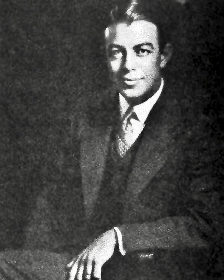
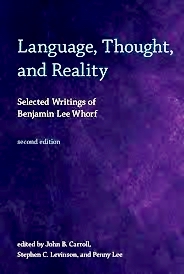
While strong versions of this hypothesis remain debated, the broader insight remains compelling: language structures thought. The categories available within a language shape the ways in which reality itself can be interpreted.
From this perspective, scientific innovation often requires the invention of new conceptual vocabularies.
From the Fringe to the Center
In this light, what we sometimes call “fringe physics” may represent an early stage in the evolution of scientific ideas. Speculative theories frequently begin as imaginative attempts to describe phenomena that resist existing explanatory frameworks.
Some of these ideas eventually fade away. Others migrate gradually from the intellectual margins to the center of scientific understanding.
The history of physics itself provides many examples. Concepts that once appeared radical — including the relativity of time or the strange probabilistic behavior of quantum particles — eventually became foundational elements of modern science.
What begins at the fringe can sometimes redefine the center.
Language as a Tool of Discovery
Seen in this way, language is not merely a passive instrument for describing reality. It is an active tool for discovery.
By crafting new metaphors and conceptual structures, scientists expand the boundaries of what can be imagined and eventually investigated. Before a theory can be tested mathematically or empirically, it must first be imagined.
And imagination, more often than not, unfolds within linguistic structures that make it intelligible.
Patterns and the Ecology of Mind
Anthropologist Gregory Bateson suggested that knowledge itself emerges from the human ability to recognize patterns in the world and organize them into meaningful relationships. Scientific theories, in this sense, may be understood as symbolic systems that attempt to capture those patterns in language, diagrams, and mathematical form.
Gregory Bateson (1904–1980) & Mary Douglas (1921–2007)
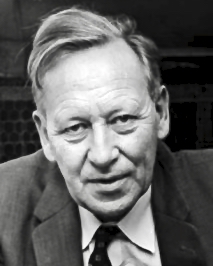
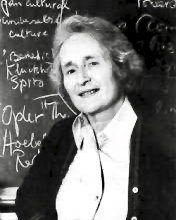
Mary Douglas similarly showed that cultural systems organize reality through patterns of order and boundary — a reminder that the human impulse to classify and name is not unique to science but runs deep in cognition itself. Both scientific theory and cultural symbolism reflect the same underlying drive: to impose intelligible structure on the complexity of the world.
Closing Reflection: Language as World-Making
These reflections also connect closely to a broader philosophical question that has long fascinated me as both an anthropologist and a philosopher: the relationship between language and world-making.
Human beings do not simply observe reality; we interpret it through conceptual frameworks shaped by language. Scientific revolutions, cultural transformations, and philosophical insights all depend upon the emergence of new ways of speaking about the world.
Perhaps this is why the frontier of science often sounds linguistically strange. The language of discovery frequently precedes the discovery itself. Seen in this light, the history of scientific discovery may reveal not only the unfolding structure of the universe, but also the remarkable capacity of the human mind and its languages to construct meaningful worlds through which that universe becomes intelligible.
References & Resources
Bateson, G. (1972). Steps to an ecology of mind. University of Chicago Press.
Bohm, D. (1980). Wholeness and the Implicate Order. Routledge.
Douglas, M. (1966). Purity and danger: An analysis of concepts of pollution and taboo. Routledge.
Einstein, A. (1949). Autobiographical notes. In P. A. Schilpp (Ed.), Albert Einstein: Philosopher–scientist (pp. 1–95). Open Court.
Jung, C. G. (1964). Man and his symbols. Doubleday.
Kuhn, T. S. (1962). The structure of scientific revolutions. University of Chicago Press.
Pari Center for New Learning. (2025). Matter, mind and multiverse. https://paricenter.com/event/matter-mind-and-multiverse/
Peat, F. D. (2002). Blackfoot physics: A journey into the Native American universe. Fourth Estate.
Whorf, B. L. (1956). Language, thought, and reality: Selected writings of Benjamin Lee Whorf. MIT Press
Written with the assistance of ChatGPT-5.3 by OpenAI (https://chat.openai.com)
Please Consider A Contribution To Help Maintain This Site!
Make a one-time donation
Make a monthly donation
Make a yearly donation
Choose an amount
Or enter a custom amount
Your contribution is greatly appreciated.
Your contribution is appreciated.
Your contribution is appreciated.

